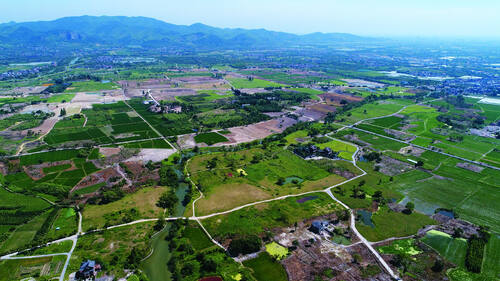
Archaeological Ruins of Liangzhu City
Introduction
The archaeological ruins of Liangzhu city are located in Hangzhou, Zhejiang province, China, and date back approximately 5,300 years. Recognized for their archaeological significance, these ruins were inscribed onto the UNESCO World Heritage list on July 9, 2019. The core area of the site encompasses 14.3 square kilometers in the northwest region of Hangzhou, underscoring its role as an early urban civilization with rice-cultivating agriculture serving as the economic backbone. The site includes a range of features such as city ruins with remnants of palaces and altars, a series of dams from an early stage of development, and high-level cemetery sites. The Liangzhu civilization is notable for its ceremonial jade artifacts, which hint at a complex ritual system and a combined authority of deity and kingship. The jade cong, a quadrangle tube with a circular inner section, is emblematic of the site, with the largest known specimen weighing 6.5 kilograms found in Fanshan Cemetery.
Historical Background
The Liangzhu archaeological site is located in the Yangtze River Basin on China's southeastern coast and represents a Neolithic era civilization dating from approximately 3,300 to 2,300 BC. This ancient society is characterized by its development of a regional state with a unified belief system centered around rice cultivation. The civilization spanned about 1,000 years, concluding approximately 4,300 years ago. The site is segmented into four primary areas: the Area of Yaoshan Site, the Area of High-dam at the Mouth of the Valley, the Area of Low-dam on the Plain, and the Area of City Site. These delineations reflect the advanced urban planning and water conservation systems that were hallmarks of Liangzhu's societal structure.
Architecture and Urban Planning
City Layout
The city layout of Liangzhu reflects early urban planning and engineering prowess, with its extensive use of earthen monuments and a well-developed hydrological system. The city included a variety of functional areas, including residential zones, palatial complexes, and ceremonial sites, each demonstrating the civilization's organizational capabilities and social stratification. These areas were interconnected by roads and canals, facilitating commerce and communication within the city and with neighboring regions.
Defensive Structures
Liangzhu's defensive structures included a series of earthen walls and a sophisticated series of dams that also served as flood control measures. These structures were vital for protecting the city from external threats and managing the water resources crucial to sustaining its agricultural base. The discovery of these walls and the surrounding water conservancy system highlighted the strategic foresight of the Liangzhu people, as well as the extensive labor and resources invested in constructing these defensive features.
Residential Areas
The residential areas in Liangzhu were designed to accommodate a growing population, reflecting the city's status as a regional hub. These areas featured a variety of housing types, indicative of a diverse social hierarchy. The layout of residential zones was likely influenced by the need for proximity to agricultural areas, water sources, and communal facilities, illustrating the integration of urban planning with the natural landscape.
Cultural Significance
The Liangzhu civilization holds immense cultural significance as a representation of early Chinese urban development and social organization. The abundance of ceremonial jade artifacts found at the site underscores the importance of ritual and religion in Liangzhu society, with jade objects serving as symbols of power and spiritual authority. The presence of complex burial sites further indicates a highly stratified society with elaborate funerary practices. Liangzhu's contributions to the development of early Chinese civilization are notable for their influence on subsequent cultural and technological advancements.
Artifacts and Findings
Jade Artifacts
Jade artifacts are among the most significant finds at Liangzhu, revealing the civilization's sophisticated craftsmanship and the symbolic importance of jade in religious and political contexts. The jade cong, along with bi disks and other ceremonial items, exemplifies the intricate artistry and the deep cultural meanings ascribed to these objects. These artifacts provide valuable insights into the rituals, beliefs, and social hierarchy of the Liangzhu people.
Pottery and Tools
In addition to jade artifacts, a variety of pottery and tools have been uncovered at the Liangzhu site. These items highlight the daily life and technological capabilities of the civilization. Pottery fragments, often decorated with intricate designs, suggest a rich cultural tradition, while tools such as stone axes and chisels indicate the methods used in agriculture and construction. Collectively, these artifacts paint a comprehensive picture of the Liangzhu civilization's material culture and everyday activities.
Preservation and Conservation
Efforts to preserve and conserve Liangzhu site have been prioritized following its UNESCO World Heritage designation. Measures include implementing protective legislation, establishing a comprehensive plan for site management, and utilizing technology for monitoring and conservation purposes. Ongoing archaeological research continues to expand the understanding of Liangzhu's historical and cultural significance, while public education initiatives aim to raise awareness and appreciation of this ancient civilization. The integration of digital exhibitions and interactive displays further enhances the dissemination of knowledge about Liangzhu, both within China and internationally.








